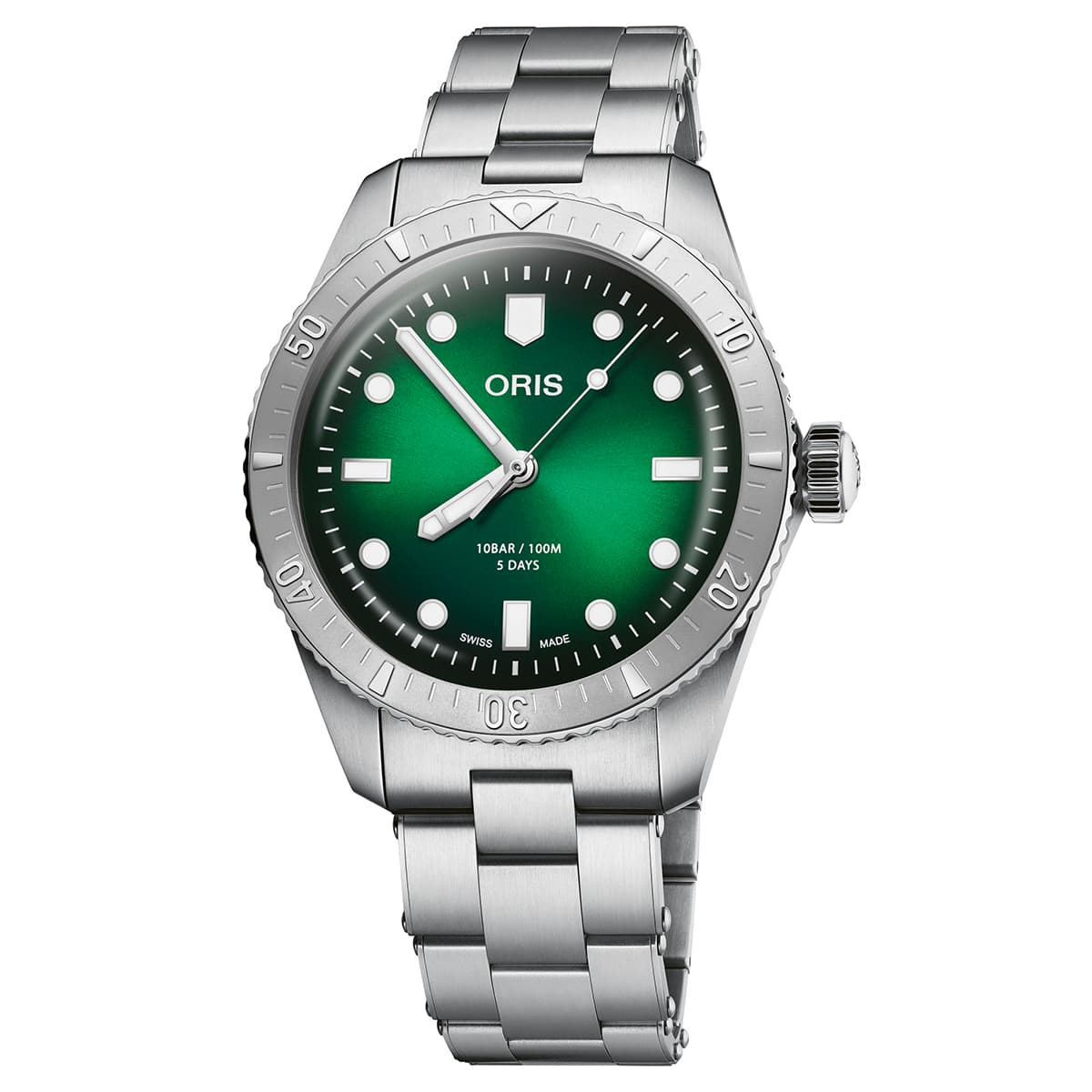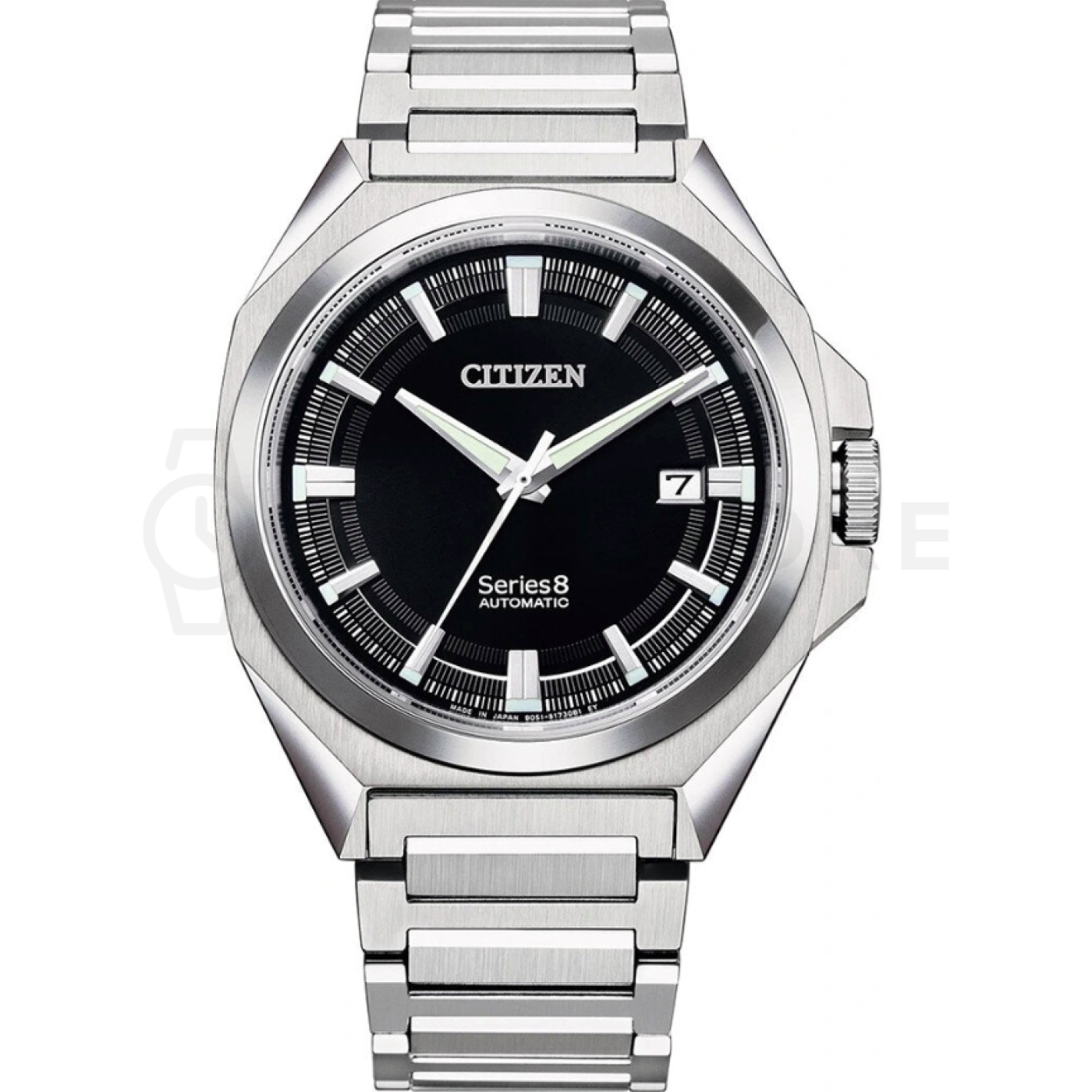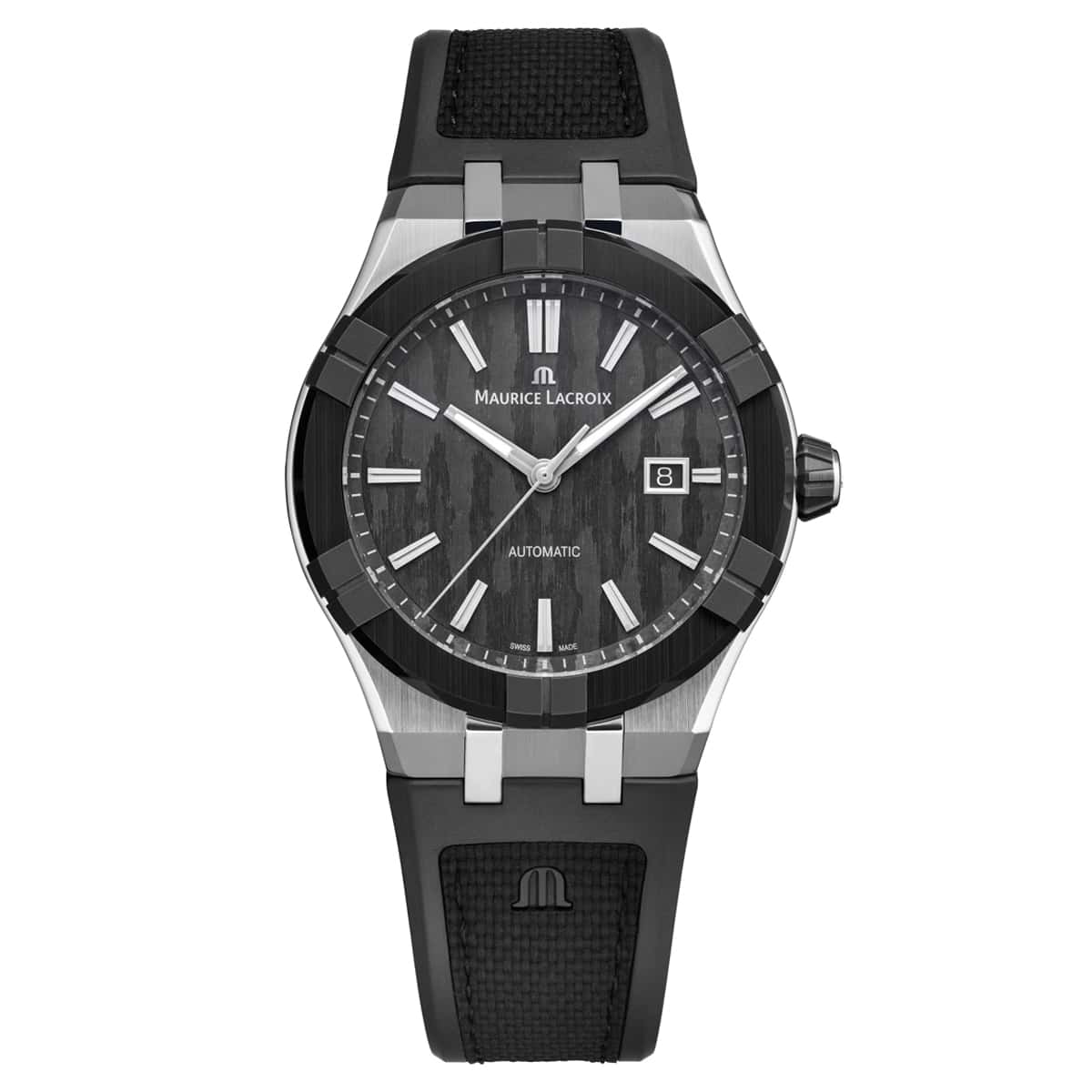
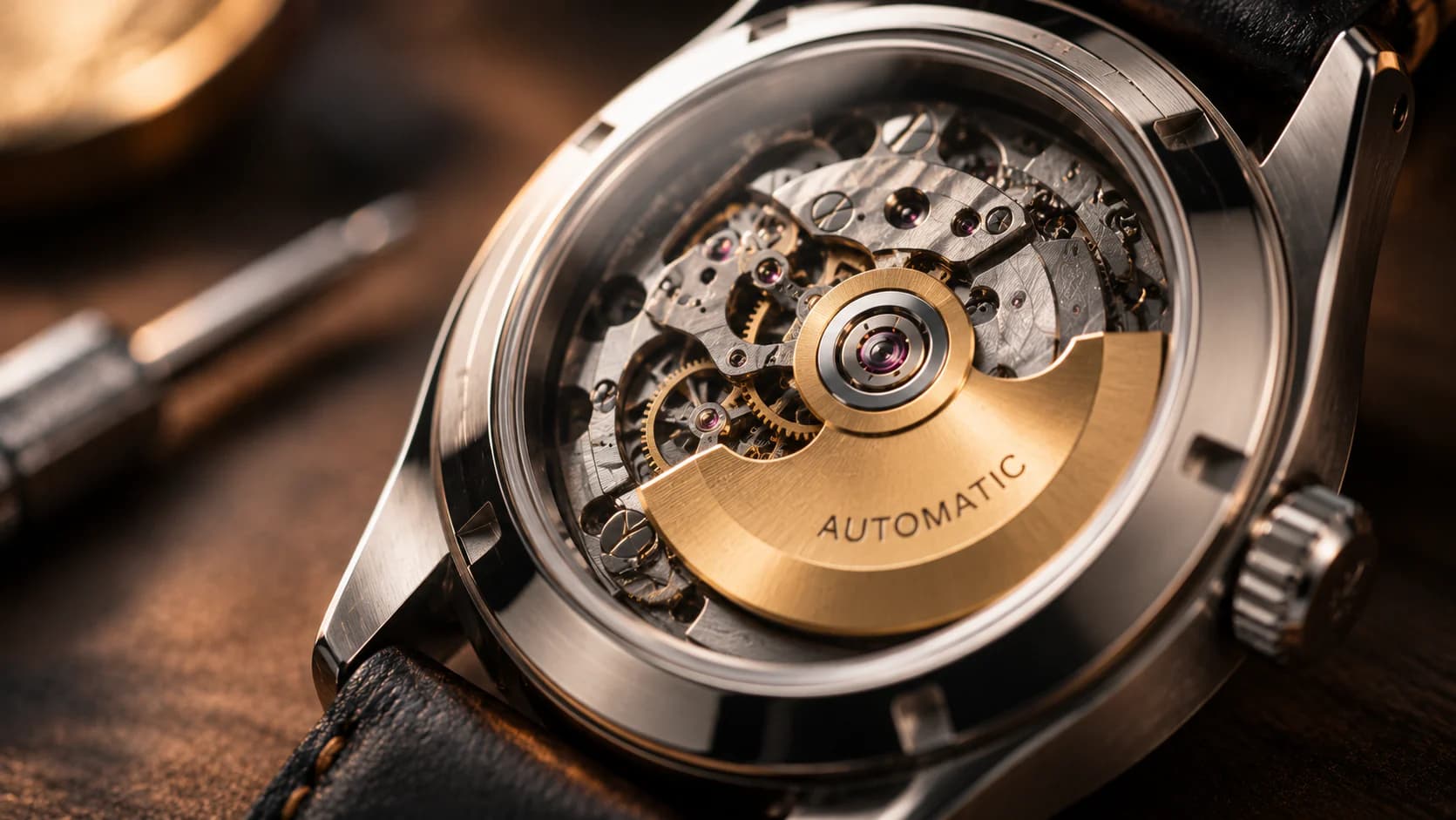
An automatic watch is a mechanical watch that winds itself. A weighted rotor inside the case turns with the movement of your wrist, and that motion winds the mainspring that drives the watch. There is no battery to replace: worn regularly, and serviced on time, the same movement can run for decades.
- RotorA weighted half-disc that swings with every movement of your wrist.
- Gear trainSteps the rotor's motion down and carries it to the mainspring.
- MainspringA coiled ribbon of steel: the store the whole watch runs on.
How an Automatic Watch Works
Every time you move your arm, the rotor swings on its pivot. A train of reduction wheels turns that swing into a slow, steady winding of the mainspring, which is coiled inside a barrel. The spring then gives its energy back through the gear train at a rate the escapement and the balance wheel hold steady — the balance swinging back and forth several times a second is what you hear as ticking, and what divides the energy into equal portions of time.
When the mainspring is fully wound, a slipping clutch lets it slip inside the barrel rather than overwind, so a day of heavy movement cannot damage anything. Almost every modern automatic can also be wound by hand at the crown, which is the quickest way to start a watch that has been resting.
What an Automatic Watch Gives You
- No battery to replace
- Serviceable for decades
- Mechanical craft you can watch
- Holds its value better
A mechanical movement is made of parts that can be cleaned, adjusted and replaced. That is the real difference: a quartz movement is usually replaced as a unit, while an automatic is serviced and goes on running. It is also the reason an automatic from a respected maker tends to keep more of its value, and why a display back is worth having — the rotor turning over the bridges is the watch at work.
Automatic or Quartz?
Neither is better; they answer different questions. A quartz movement is regulated by a crystal vibrating at a fixed frequency, which makes it far more precise, thinner, lighter and cheaper to own. An automatic is regulated by a mechanical balance, which makes it less precise but repairable, and alive on the wrist in a way quartz is not.
| Automatic | Quartz | |
|---|---|---|
| Energy | Your wrist winds the mainspring | A battery, replaced every few years |
| Typical accuracy | Seconds a day | Seconds a month |
| If left unworn | Stops within a day or two | Keeps running |
| Servicing | Every several years, by a watchmaker | Battery changes; the movement is usually replaced |
| On the wrist | Thicker and heavier as a rule | Thinner and lighter as a rule |
Who Is It For?
An automatic suits someone who wears the same watch most days and enjoys it as an object: the sweep of the seconds hand, the weight of it, the fact that nothing in it needs electricity. If you wear a watch only now and then, or you need it to be right to the second, a quartz model will serve you better and ask far less of you.
What to Keep in Mind
- Accuracy is measured in seconds a day, not a month. A deviation of a few seconds a day is normal for a mechanical movement.
- Strong magnets — laptop speakers, bag clasps, induction hobs — can throw the rate off. A watchmaker can demagnetise it in minutes.
- Many movements dislike having the date changed late at night, while the date mechanism is engaged. Move the hands to mid-morning first.
- A mechanical movement needs periodic service: fresh oil and a clean before wear begins to show.
- Water resistance depends on the gaskets, not the movement, and it is not permanent. Have it checked when the watch is opened.